Mesospheric Atmospheric Sampling
Deliver scientific instruments directly into the mesosphere to gather critical climate and ionospheric research data using RF-transparent, wound specialized fiberglass payload vehicles.

Access the under-sampled mesospheric region with cost-effective, environmentally friendly light-gas launch systems. Green Launch provides rapid sub-orbital delivery for atmospheric sampling, climate research, and ionospheric radio frequency experiments, accelerating custom payloads through extreme altitudes using clean hydrogen and oxygen propellant with minimal environmental impact.

Enabling rapid, cost-effective sub-orbital delivery and scientific data gathering in the upper atmosphere.
Deliver scientific instruments directly into the mesosphere to gather critical climate and ionospheric research data using RF-transparent, wound specialized fiberglass payload vehicles.
Accelerate customer payloads beyond the stratosphere via proven vertical launch tubes, offering dedicated flight profiles for scientific research organizations and defense missions.
Test scramjet components and high-speed aerospace systems up to Mach 9 velocities using clean combustion light-gas accelerator platforms in controlled field testing environments.
Researchers historically face limited, expensive access to the mesosphere and ionosphere for critical surveillance, navigation, and climate studies. Green Launch utilizes reusable light-gas launch tubes powered by hydrogen and oxygen propellants, yielding only water vapor byproduct while sending payload vehicles into extreme altitudes without the costly overhead of traditional chemical rockets.

Pioneering sustainable, low-cost access to sub-orbital altitudes and high-velocity flight regimes.
Hydrogen-oxygen propellant produces zero carbon emissions, releasing only clean water vapor during operation.
Demonstrated velocities reaching up to Mach 9 for advanced aerodynamics and rapid ascent.
Specialized wound fiberglass vehicle bodies protect internal telemetry antennas during high-compression launches.
Reusable launcher infrastructure drastically reduces deployment costs compared to expendable chemical sounding rockets.
Decades of high-velocity propulsion engineering and flight operations.
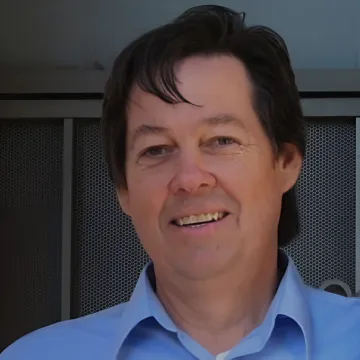
Chief Technical Officer
Dr. John W. Hunter brings deep expertise in high-velocity propulsion systems and advanced aerospace research to Green Launch. A physicist by training, he is known for leading the SHARP project at Lawrence Livermore National Laboratory, giving him rare hands-on experience with extreme-speed launch concepts and experimental propulsion platforms. At Green Launch, he helps guide the technical direction behind hypersonic testing, scramjet-related applications, and light-gas launch development. His background supports the company's focus on turning ambitious launch theory into practical, testable systems for defense, aerospace, and scientific customers. Dr. Hunter's leadership is central to Green Launch's ability to pursue Mach 9-class performance with a disciplined, data-driven engineering approach.
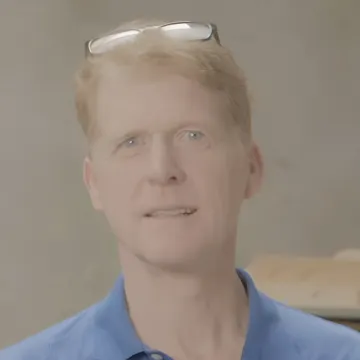
Strategic Outreach
Eric Robinson supports Green Launch's strategic outreach with a background in systems science and entrepreneurship. His experience in fluid delivery systems for aerospace applications aligns closely with the company's light-gas propulsion model and broader mission development efforts. He helps connect Green Launch's technical capabilities with the needs of defense organizations, research institutions, and commercial aerospace stakeholders seeking practical alternatives to conventional launch methods. By translating complex engineering value into mission-focused opportunities, he plays an important role in partnership development and customer engagement. His work helps ensure Green Launch's hypersonic and sub-orbital services are positioned clearly for organizations that need speed, efficiency, and credible technical collaboration.
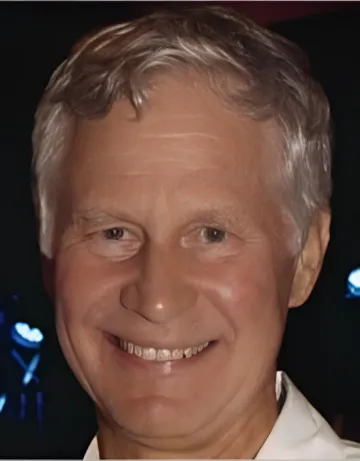
Chairman of the Board
Don Whitney brings operational perspective to Green Launch through his experience as an Air Force pilot and environmental consultant. His background supports the company's planning around mission execution, safety considerations, and practical deployment strategy for advanced launch systems. At Green Launch, he contributes to board-level leadership and helps shape how the company balances ambitious aerospace innovation with real-world operational discipline. His aviation and environmental experience also complements Green Launch's emphasis on cleaner propulsion and more sustainable launch alternatives. For customers evaluating hypersonic testing or sub-orbital delivery partners, his presence reinforces the company's ability to think beyond engineering alone and address broader mission planning requirements.
A mesosphere launch delivers payloads into the atmospheric layer between approximately 50 and 85 kilometers altitude. Traditional weather balloons cannot float this high, and orbital satellites cannot operate this low due to atmospheric drag. Green Launch utilizes high-velocity light-gas launch tubes to propel specialized scientific projectiles directly through this boundary for atmospheric sampling and research.
Speak with our technical engineering team regarding payload dimensions and flight windows.

Achieved record high Mach flight speeds.
Demonstrated over 91% gas capture.
Exceeded Mach 3 vertical flight.
Submit your payload parameters and mission objectives to connect with our aerospace engineering team.
For immediate assistance, feel free to give us a direct call at 619-933-6678. You can also send us a quick email at eric.robinson@greenlaunch.space.
For immediate assistance, feel free to give us a direct call at 619-933-6678. You can also send us a quick email at eric.robinson@greenlaunch.space.