Payload Delivery
Sub-orbital payload delivery creates opportunities for research groups and commercial operators needing fast, lower-cost access to the stratosphere and beyond for testing, sensing, and mission validation.

Explore how launch-adjacent ecosystems create demand for payload testing, atmospheric research, logistics support, and orbital delivery services. This page highlights practical commercial opportunities emerging around modern space infrastructure, with insights shaped by real-world launch operations, proving-ground testing, and the growing need for faster, lower-cost access to high-altitude and orbital missions.
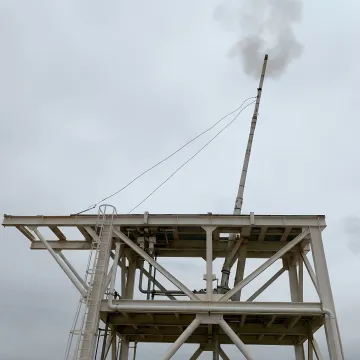
Key launch-adjacent capabilities supporting research, testing, payload access, and orbital logistics opportunities.
Sub-orbital payload delivery creates opportunities for research groups and commercial operators needing fast, lower-cost access to the stratosphere and beyond for testing, sensing, and mission validation.
Atmospheric sampling missions support climatology, communications, and surveillance research by enabling access to upper-atmosphere regions that are difficult and expensive to reach through conventional methods.
Hypersonic vehicle testing opens opportunities for aerospace and defense programs seeking high-velocity validation, propulsion data, and repeatable test environments for advanced flight systems.
Horizontal test firing supports iterative development by generating performance data across pressure, weight, and velocity variables, helping organizations refine launch and propulsion concepts efficiently.
Satellite and supply delivery to orbit creates commercial opportunities in responsive launch, replenishment logistics, and lower-cost access for operators serving Low Earth Orbit missions.
Space-depot and propellant delivery concepts support future in-space refueling models, creating opportunities for infrastructure providers, mission planners, and orbital supply chain partners.
Business opportunities near space launch sites extend far beyond liftoff itself. As launch infrastructure expands, surrounding markets benefit from demand for testing, payload integration, atmospheric research, orbital logistics, and specialized engineering support. Green Launch helps illustrate this shift through light-gas propulsion capabilities designed to reduce launch costs, improve responsiveness, and support both sub-orbital and orbital mission needs for research, defense, and satellite customers.
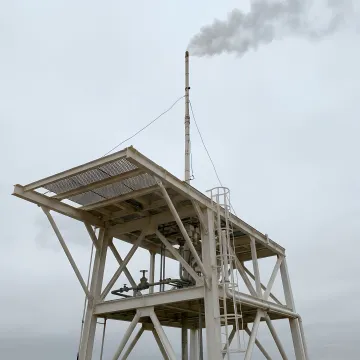
Green Launch brings technical depth and practical testing progress to emerging space-access opportunities.
Successful horizontal and vertical test milestones demonstrate disciplined development and operational follow-through.
The company is built around reducing launch costs for research, defense, and orbital delivery customers.
Hydrogen and oxygen propulsion supports lower-emission launch concepts with water vapor as the byproduct.
Experienced physics, aerospace, and systems experts guide strategy, testing, and commercialization efforts.
Experienced experts advancing practical space access.
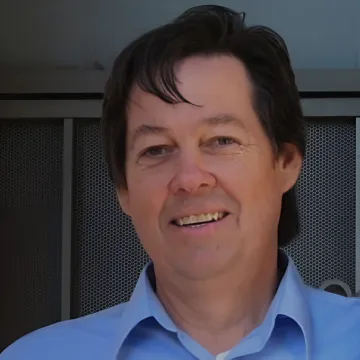
Chief Technical Officer
Dr. John W. Hunter brings deep expertise in high-velocity propulsion systems and advanced aerospace research to Green Launch. A physicist by training, he is known for leading the SHARP project at Lawrence Livermore National Laboratory, giving him rare hands-on experience with extreme-speed launch concepts and experimental propulsion platforms. At Green Launch, he helps guide the technical direction behind hypersonic testing, scramjet-related applications, and light-gas launch development. His background supports the company's focus on turning ambitious launch theory into practical, testable systems for defense, aerospace, and scientific customers. Dr. Hunter's leadership is central to Green Launch's ability to pursue Mach 9-class performance with a disciplined, data-driven engineering approach.
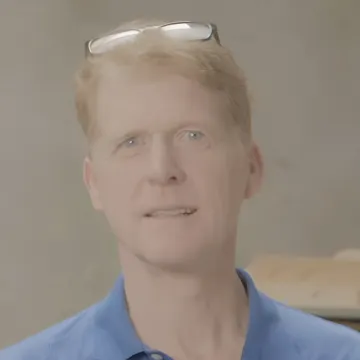
Strategic Outreach
Eric Robinson supports Green Launch's strategic outreach with a background in systems science and entrepreneurship. His experience in fluid delivery systems for aerospace applications aligns closely with the company's light-gas propulsion model and broader mission development efforts. He helps connect Green Launch's technical capabilities with the needs of defense organizations, research institutions, and commercial aerospace stakeholders seeking practical alternatives to conventional launch methods. By translating complex engineering value into mission-focused opportunities, he plays an important role in partnership development and customer engagement. His work helps ensure Green Launch's hypersonic and sub-orbital services are positioned clearly for organizations that need speed, efficiency, and credible technical collaboration.
Chairman of the Board
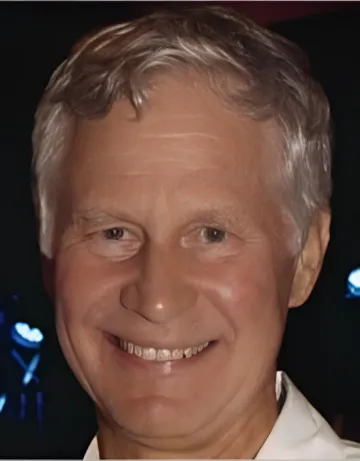
Don Whitney brings operational perspective to Green Launch through his experience as an Air Force pilot and environmental consultant. His background supports the company's planning around mission execution, safety considerations, and practical deployment strategy for advanced launch systems. At Green Launch, he contributes to board-level leadership and helps shape how the company balances ambitious aerospace innovation with real-world operational discipline. His aviation and environmental experience also complements Green Launch's emphasis on cleaner propulsion and more sustainable launch alternatives. For customers evaluating hypersonic testing or sub-orbital delivery partners, his presence reinforces the company's ability to think beyond engineering alone and address broader mission planning requirements.
Five strong business opportunities near space launch sites include payload testing, sub-orbital research missions, atmospheric sampling, orbital logistics support, and propulsion or vehicle validation services. These opportunities grow as launch infrastructure attracts aerospace firms, research institutions, and satellite operators that need nearby technical support, faster turnaround times, and lower-cost access to specialized launch-adjacent capabilities.
Connect with our team to discuss launch-adjacent applications and partnerships.

Years of focused propulsion development.
Multiple successful proving-ground test campaigns.
Lower-emission propulsion system positioning.
Share your goals, payload concept, or partnership interest, and our team will help identify relevant capabilities and next steps.
For immediate assistance, feel free to give us a direct call at 619-933-6678. You can also send us a quick email at eric.robinson@greenlaunch.space.
For immediate assistance, feel free to give us a direct call at 619-933-6678. You can also send us a quick email at eric.robinson@greenlaunch.space.