What altitudes can Green Launch's atmospheric sampling technology reach?
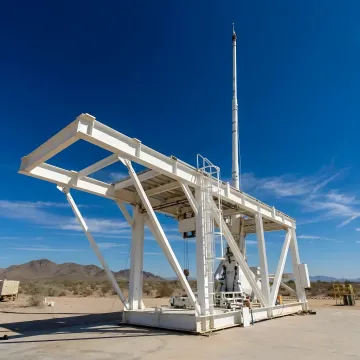
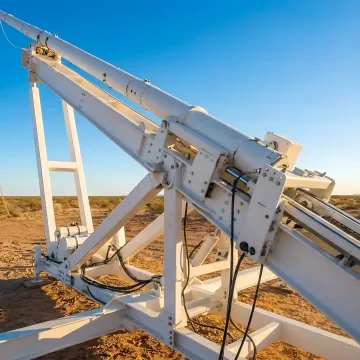
Our light-gas propulsion system delivers sampling payloads to stratospheric and mesospheric altitudes, with vertical launches exceeding Mach 3 velocities. The technology has been proven in over 25 successful test firings since 2017, providing researchers access to atmospheric regions between 50-85 kilometers altitude. Our specialized fiberglass vehicles maintain structural integrity through extreme velocities, enabling data collection from previously difficult-to-access ionospheric layers critical for climatology and communications research.
How does light-gas propulsion benefit atmospheric research compared to traditional rockets?
Light-gas propulsion offers significant advantages for atmospheric sampling missions. Our hydrogen-oxygen system produces only water vapor, ensuring zero carbon contamination of atmospheric samples—critical for accurate climatology data. The technology delivers dramatically lower costs than traditional rockets, enabling frequent sampling campaigns. With 91% propellant capture efficiency, we minimize muzzle flash and acoustic signatures. Launch preparation at Yuma Proving Ground allows multiple missions per day, providing researchers with time-series atmospheric data previously unattainable due to rocket launch costs and scheduling constraints.
What types of atmospheric data can be collected during GWT20 missions?
GWT20 missions collect comprehensive atmospheric composition, temperature, pressure, and ionospheric data across multiple altitude bands. Our RF-transparent fiberglass vehicle construction protects sensitive instruments while enabling antenna operations for electromagnetic measurements. Sampling payloads can include gas chromatography equipment, temperature sensors, pressure transducers, and radiation detectors. Data acquisition occurs during both ascent and descent phases, providing vertical atmospheric profiles. Mission telemetry captures launch parameters, vehicle velocities, altitude profiles, and environmental conditions, delivering complete datasets for climatology analysis and communications system development.
Who are the primary customers for Green Launch's atmospheric sampling services?
Our primary customers include scientific research organizations, government agencies, and universities requiring mesospheric access for climatology studies. The National Science Foundation has engaged our services for atmospheric sampling missions. Defense and aerospace organizations utilize our hypersonic testing capabilities for communications and surveillance R&D. Climatologists studying upper atmospheric chemistry and ionospheric researchers developing navigation technologies rely on our cost-effective access to hard-to-reach atmospheric regions. Any research entity requiring reliable, repeatable atmospheric data collection from stratospheric or mesospheric altitudes benefits from our proven light-gas propulsion technology.
What makes Green Launch's vehicle design suitable for atmospheric sampling?
Our vehicles use wound specialized fiberglass construction optimized for atmospheric research requirements. This material provides exceptional compression strength during launch acceleration while maintaining low weight for maximum altitude achievement. Critically, the fiberglass is transparent to RF signals, allowing protected antenna placement inside the vehicle body—essential for ionospheric measurements and communications testing. The design withstands extreme velocities up to Mach 9 while protecting sensitive sampling instruments. Vehicle recovery enables payload retrieval for laboratory analysis, ensuring researchers receive both in-situ telemetry data and physical atmospheric samples for comprehensive study.
How frequently can atmospheric sampling missions be conducted?
Our Yuma Proving Ground facility enables rapid-turnaround mission cadences with demonstrated capability for multiple launches per day. During our April 2018 test series, we achieved two shots daily using YPG personnel and our team. The light-gas propulsion system's simplicity compared to traditional rockets allows 60-90 minute launch intervals once testing parameters are established. This frequency enables researchers to conduct time-series atmospheric studies, capture diurnal variations, and respond quickly to atmospheric events of interest. The Arizona desert location provides consistent weather conditions year-round, minimizing weather-related delays common with rocket launches.
What safety and environmental considerations are addressed during launches?
Green Launch prioritizes both safety and environmental stewardship in all atmospheric sampling missions. Our hydrogen-oxygen propellant produces only water vapor—zero carbon emissions and no atmospheric contamination affecting research data integrity. The 91% propellant capture system significantly reduces muzzle flash and acoustic signatures compared to conventional systems. All testing at Yuma Proving Ground follows rigorous military proving ground safety protocols with established range safety procedures. Precision gas injection prevents errant detonation in the combustion chamber. Vehicle flight paths are carefully calculated, and recovery zones secured. Our sustainable approach ensures atmospheric research doesn't compromise the environment being studied.
What mission data and documentation do researchers receive after launches?
Researchers receive comprehensive mission documentation including detailed telemetry, launch parameters, and atmospheric condition data. This includes gas charge pressures, release peak pressures, vehicle weight, resulting velocities, altitude profiles, and acceleration curves. In-situ instrument data from sampling payloads is provided in raw and processed formats. Vehicle recovery enables physical sample retrieval when applicable. We supply complete environmental context including launch site weather conditions, atmospheric density profiles, and flight trajectory analysis. All data necessary to support scientific publication and peer review is documented, ensuring research teams can validate findings and integrate results into broader atmospheric studies.