
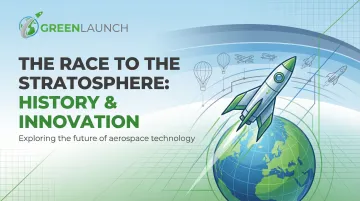
The stakes have shifted across eras. In the 1930s, reaching the stratosphere meant national prestige. During the Cold War, it meant intelligence dominance. Today, it represents a revolutionary platform for broadband delivery, environmental monitoring, and rapid satellite deployment. This article traces that evolution—from heroic balloon flights through decades of military surveillance programs to cutting-edge propulsion systems reshaping how we access this critical zone.
TLDR: Key Takeaways
- The stratosphere spans roughly 33,000–165,000 feet, where thin air prevents conventional flight yet remains too dense for orbital satellites
- 1930s balloon "stratonauts" from the US and USSR raced for altitude records — a rivalry that established the competitive playbook the Space Race later followed
- Cold War programs like the U-2 and SR-71 proved stratospheric persistence delivers strategic advantage, driving modern defense investment
- Solar UAVs, high-altitude balloons, and light-gas propulsion systems are opening stratospheric access to a wider range of operators — military, commercial, and scientific
- Commercial and defense applications range from persistent surveillance to affordable small-satellite launch at $100 per pound
What Is the Stratosphere? The Frontier Between Sky and Space
The stratosphere extends from approximately 4–12 miles above Earth's surface to roughly 31 miles (50 km) altitude. Temperature increases with height due to ozone formation, ranging from an average of -60°F at the lower boundary (tropopause) to about 5°F at the upper boundary (stratopause). Winds average 15–25 knots, and the extremely thin air creates hostile conditions for conventional aircraft and human physiology.
This region earned the nickname "ignored zone" for good reason. Conventional aircraft face a deadly aerodynamic trap called "coffin corner"—where stall speed and critical Mach number converge.
As one FAA technical manual explains, "At some point, the stall speed of the aircraft in Mach number could equal the maximum operating speed of the aircraft, and the pilot could neither slow down (without stalling) nor speed up (without exceeding the max operating speed)."
Aircraft top out well before the stratosphere's ceiling—but satellites can't reach down into it either. Residual atmospheric drag below 150–200 km causes terminal spiral and reentry, making stable orbits impossible. The result is a strategic vacuum that NASA has called a "critical knowledge gap": a zone where neither traditional aircraft nor orbital platforms can economically operate.
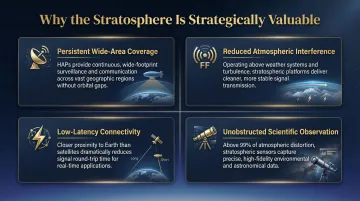
What makes the stratosphere strategically valuable:
- Delivers persistent wide-area coverage that satellites cannot match at low cost
- Reduces atmospheric interference for sensors and communications
- Enables low-latency connectivity due to proximity to Earth
- Provides an unobstructed vantage point for scientific observation and environmental monitoring
The 1930s Race to the Stratosphere: Balloons, National Pride, and Scientific Daring
Global altitude competition intensified in the early 1930s as aviators pushed airplane ceilings during record attempts in 1930–1934. The real breakthrough, however, came not from aircraft but from pressurized stratospheric balloons called "stratostats."
Auguste Piccard and the First Human to the Stratosphere
On May 27, 1931, Swiss physicist Auguste Piccard and assistant Charles Kipfer became the first humans to reach the stratosphere, ascending to 51,775 feet aboard the FNRS balloon launched from Augsburg, Germany. Their gondola—an 850-pound, 7-foot-diameter pressurized aluminum sphere—became the direct engineering ancestor of spacecraft pressure vessels.
The flight nearly ended in disaster multiple times:
- An oxygen leak required emergency patching with paste and netting
- A failed motor left the gondola facing the sun, driving internal temperatures to 104°F
- The descent valve rope broke, stripping them of reliable landing control
They survived all of it, and global media coverage transformed them into celebrities overnight.
Piccard's second flight on August 18, 1932, reached 53,153 feet. His subsequent 1932–33 tour of the United States, where he discussed plans for a "stratospheric rocket," triggered geopolitical alarm. Both the Soviets and Americans realized they were falling behind in what publicists were already calling a "race to the stratosphere."
The Soviet Stratostat SSSR and America's Century of Progress
The USSR responded with the Stratostat SSSR on September 30, 1933. Crew members G.A. Prokof'ev, E.K. Birnbaum, and K.D. Godunov piloted the Soviet Air Force-sponsored balloon to 60,695 feet, claiming a new world record. The cultural impact was immediate—candy named "Stratosfera" appeared in stores, and crowds celebrated the crew as national heroes and "victors over the air."
The U.S. countered on November 20, 1933: Lt. Cdr. Thomas G.W. Settle and Major Chester L. Fordney piloted the Century of Progress balloon to 61,237 feet, edging the Soviet mark by roughly 540 feet. The following year, Jean and Jeanette Piccard's October 23 flight to 57,579 feet made Jeanette the first woman to reach the stratosphere.
That back-and-forth dynamic was the Space Race in miniature, decades early. Historians like David H. DeVorkin note that the 1930s rivalry made nations "stratosphere-conscious," serving as a "prelude to the coming stratospheric and space rockets" with the same propaganda logic and "stronauts as heroes" narrative that would resurface in the Sputnik era.
The human cost became tragically clear on January 30, 1934, when the civilian-funded Soviet balloon Osoaviakhim-1 set a new record of 71,759 feet before crashing, killing all three crew members. Prolonged stay at record altitude overheated the lifting gas; rapid cooling during descent caused severe buoyancy loss, snapping suspension cables. The disaster made plain what the record books had obscured: the competition was moving faster than the engineering could safely support.
From Cold War Surveillance to Commercial Ambitions
World War II and the Cold War transformed stratospheric interest from record-chasing to strategic imperative. The U-2 spy plane, operating around 70,000 feet, and the SR-71 Blackbird, cruising above 85,000 feet at Mach 3.3, demonstrated that high-altitude persistence meant intelligence dominance. Gary Powers' 1960 shootdown over the USSR underscored both the value and vulnerability of stratospheric surveillance.
That military-driven infrastructure laid a conceptual foundation. As Cold War budgets contracted, engineers and entrepreneurs recognized that the same altitude advantages — persistent coverage, wide-area visibility, low atmospheric drag — had obvious commercial value. Rising satellite costs accelerated the shift, drawing companies toward the stratosphere for broadband relay, Earth observation, and communications platforms. Early programs included HALE (High Altitude Long Endurance) UAV development and stratospheric airship proposals.
Enabling technologies began dissolving what researchers called the "ignore-o-sphere" — the stratosphere's long reputation as a zone too high for aircraft and too low for satellites:
- Lightweight composite materials cut structural mass enough to offset thin-air lift penalties
- Higher-efficiency solar cells enabled continuous daytime power generation at altitude
- Improved battery energy density extended operational windows through overnight gaps in solar availability
- Hydrogen fuel cells offered a high-energy-density alternative for longer endurance missions

Together, these advances shifted sustained stratospheric flight from theoretical to operational — opening the door for vehicles that could loiter at altitude for days or weeks at a time.
Modern Technologies Conquering the Stratosphere
The stratosphere is no longer the exclusive domain of exotic spy planes. Today's technology landscape includes four main platform categories: high-altitude balloons, solar-powered UAVs, high-altitude airships, and propulsion-launched vehicles.
Military and Defense Renaissance
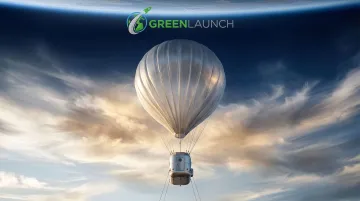
The US military has renewed investment in high-altitude balloon swarms for intelligence and communications. The Army's SWARMS (Swarming Worldwide Autonomous Reconnaissance in the Multi-domain System) program plans to launch ~200 attritable balloons within 1,000 miles of Hawaii in the Indo-Pacific, with a $3.5 million budget for the 2026 experiment.
Andrew Evans, Director of the Army Strategy & Transformation Office, explains the strategic logic: "Our primary goal is to demonstrate autonomous swarming capabilities that generate a persistent, cost-effective presence in the stratosphere... rapid reconstitution of on-orbit capabilities when space is denied or degraded."
At scale, adversaries cannot distinguish between decoy balloons, sensor platforms, and kinetic effectors — mass disruption at low cost.
NORAD's February 4, 2023 shootdown of a Chinese surveillance balloon over US territorial waters confirmed that the stratosphere is now a contested domain. Active monitoring and response are no longer optional.
Defense doctrine now explicitly treats this as an operational frontier. As one analyst notes, "We're using this both to define what intel sensing could look like at scale [and] operationalizing the stratosphere for a phase one-type conflict."
Solar UAVs, Airships, and Persistent Platforms
Solar-powered HALE UAVs have pushed endurance beyond what seemed feasible even five years ago. The Airbus Zephyr, operating at 76,100 feet, completed a 67-day, 6-hour, 52-minute continuous flight that concluded in April 2025, with commercial entry planned for Japan in 2026.
Lockheed Martin's High Altitude Airship program, initiated in 1998 by the Missile Defense Agency, targeted 65,000 feet altitude with 4,000-pound payload capacity and 30-day endurance. Budget constraints ended the full-scale program, but the concept validated persistent coverage as a viable stratospheric mission.
Enabling technology breakthroughs include:
- Multi-junction photovoltaic cells now hit 47.6% efficiency, enabling year-round solar flight
- Lithium-ion batteries deliver 100–265 Wh/kg, supporting overnight power storage
- NASA's carbon nanotube yarn composites cut structural mass by 25% over traditional carbon fiber
Commercial applications now drive significant investment. The High Altitude Platforms Market was estimated at $1.54 billion in 2023, projected to reach $2.66 billion by 2030. Applications include broadband internet delivery to remote regions, agricultural monitoring, and cellular relay for underserved markets.
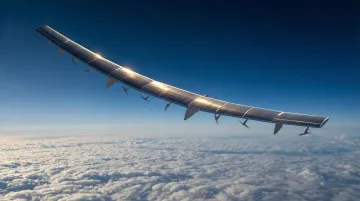
Alphabet's Loon project demonstrated the concept by achieving a 312-day flight record delivering connectivity from 18–25 km altitude, before shutting down in January 2021 due to profitability challenges. Where Loon left off, others have continued: HAPSMobile's Sunglider reached 62,500 feet in September 2020, demonstrating LTE connectivity delivery from the stratosphere. The commercial case remains unresolved, but the technical proof points are stacking up.
The Next Leap: Propulsion Innovation and the Future of Stratospheric Access
While balloons and solar UAVs excel at persistence, rapid, repeatable payload delivery to high altitude demands propulsion-based solutions. The cost barrier of traditional chemical rockets has long bottlenecked affordable stratospheric and suborbital access.
Light-gas gun technology offers a fundamentally different approach. Hydrogen or helium propellant gas achieves far higher muzzle velocities than chemical propellants—a direct consequence of low molecular weight. The Super High Altitude Research Project (SHARP) at Lawrence Livermore National Laboratory, operational in December 1992, demonstrated this principle by achieving 3.1 km/s (Mach 9) velocities with 4.4 to 5.9 kg projectiles using an 82-meter pump tube and 47-meter launch tube.
Under Dr. John W. Hunter, SHARP successfully launched nine hypersonic scramjets and set a record for high Mach number engine operation in free-flying scramjets at Mach 8. The program was cancelled in 1995 after failing to secure $1 billion for orbital-scale development—but the validated science didn't disappear with the funding.
Green Launch was built on that foundation. Dr. Hunter, now the company's Chief Technical Officer, applies the same light-gas principles using hydrogen and oxygen propellant to deliver payloads to high altitude and orbital trajectories at a target cost of $100 per pound—a fraction of what conventional rockets charge. The company achieved a milestone in 2022 with its first vertical light-gas launch for space access at Yuma Proving Ground, accelerating a 28-pound projectile to velocities exceeding Mach 3 and reaching an estimated altitude of 30 km.
Recent testing demonstrates continued progress. In October 2025, Green Launch achieved projectile velocities of 2.97 km/sec (Mach 9) using a one-stage light-gas combustion system—performance approaching orbital insertion requirements.
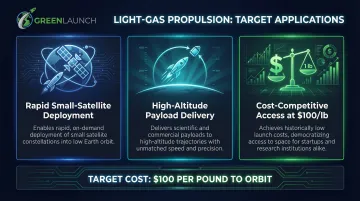
Target use cases intersect directly with historical themes of this article:
- Rapid small-satellite deployment for defense and scientific customers
- High-altitude payload delivery for atmospheric research and climate monitoring
- Cost-competitive access for the aerospace industry, with pricing targeting $100 per pound to orbit
The 1930s balloon pioneers measured success in altitude records. Cold War reconnaissance programs measured it in intelligence gathered. The current benchmark is simpler: launching a cubesat for less than the cost of a used car. Ground-based light-gas systems are the most direct path to that number.
Frequently Asked Questions
What exactly is the stratosphere, and why is it so hard to reach?
The stratosphere extends from roughly 33,000 to 165,000 feet altitude. Air is too thin for conventional flight — creating the aerodynamic "coffin corner," where stall speed and overspeed converge simultaneously — yet too dense for orbital satellites. Extreme temperatures ranging from -60°F to 5°F and intense radiation make sustained access technically demanding.
Who was the first person to reach the stratosphere?
Auguste Piccard and Charles Kipfer became the first humans to reach the stratosphere on May 27, 1931, ascending to 51,775 feet in a pressurized gondola beneath a hydrogen balloon. They returned safely despite oxygen leaks and equipment failures along the way.
How did the 1930s stratospheric balloon race relate to the later Space Race?
The US-Soviet competition of 1933–1934 established the pattern of national prestige contests tied to altitude records — the same propaganda logic and hero-worship of "stronauts" that would define the Sputnik era. It was a direct cultural and institutional predecessor to the Space Race.
What modern technologies are being used to access and utilize the stratosphere today?
Four main categories dominate today:
- High-altitude balloons — including military swarm programs like SWARMS
- Solar-powered HALE UAVs — such as the Airbus Zephyr
- High-altitude airships — for persistent station-keeping
- Propulsion-launched vehicles — including light-gas gun systems
Each serves different mission profiles, from wide-area surveillance to rapid payload delivery.
What is light-gas propulsion, and how is it different from traditional rockets?
Light-gas guns use lightweight gases — typically hydrogen — as propellant, which allows them to achieve higher muzzle velocities than chemical rockets for small, acceleration-tolerant payloads. The combustion produces only water vapor, making the approach environmentally cleaner and cost-effective for suborbital and small-satellite orbital delivery.
Why is the stratosphere strategically important for defense and commercial users today?
The stratosphere offers persistent wide-area coverage that satellites cannot match economically, enabling intelligence-gathering, communications relay, and environmental monitoring. For defense users, fielding large numbers of low-cost sensor and strike platforms at stratospheric altitudes opens a new competitive domain — one where expensive satellites are both vulnerable and hard to replace quickly.