Where are space launches happening?
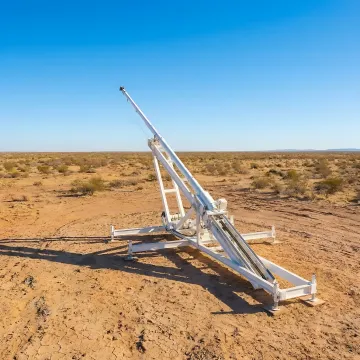
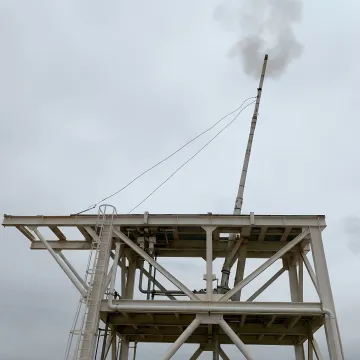
Green Launch conducts all testing and launch operations at Yuma Proving Ground in Arizona, a premier military testing facility. This site features both horizontal and vertical launch configurations with our 54-foot launch tubes. Yuma Proving Ground provides the controlled environment, safety infrastructure, and range space necessary for hypersonic testing and sub-orbital launches. We've completed over 25 successful test firings at this location, achieving velocities exceeding Mach 9. The facility supports our rapid turnaround capability, enabling multiple launches per day with comprehensive telemetry and tracking systems.
What time will Artemis 2 launch tomorrow?
Green Launch does not operate NASA's Artemis program—Artemis is a separate NASA-led lunar exploration initiative. Green Launch specializes in light-gas propulsion systems for sub-orbital payload delivery, atmospheric sampling, and orbital satellite deployment using our proprietary hydrogen cannon technology. For official Artemis launch schedules, please consult NASA's website or official mission updates. Our launch schedule focuses on commercial, research, and defense customers requiring cost-effective access to the stratosphere, mesosphere, and Low Earth Orbit with launch windows every 60-90 minutes once operational.
How does light-gas propulsion differ from traditional rockets?
Light-gas propulsion uses hydrogen and oxygen gas combustion in a closed tube to accelerate payloads, whereas traditional rockets carry fuel throughout flight. Our system achieves Mach 9 velocities with water vapor as the only byproduct—zero carbon emissions. The technology enables 60-90 minute turnaround times between launches compared to days or weeks for rockets. With over 91% propellant capture, we've minimized acoustic signatures and environmental impact. Our hydrogen cannon delivers payloads at a target cost of $100/lb to orbit, significantly lower than conventional rocket systems, making space access economically viable for more customers.
What types of payloads can Green Launch deliver?
We deliver sub-orbital payloads to the stratosphere and mesosphere for atmospheric sampling, climate research, and communications R&D. Our hypersonic vehicle testing services support scramjet development up to Mach 9. For orbital missions, we're developing capabilities to deliver small satellites, ISS supplies, and propellant to space depots. Payloads are housed in specialized RF-transparent fiberglass vehicles that are lightweight yet strong in compression. Current testing demonstrates successful delivery of instrumented payloads for the National Science Foundation and defense research customers requiring access to previously unreachable atmospheric regions.
What is the environmental impact of Green Launch operations?
Green Launch technology produces zero carbon emissions—our hydrogen-oxygen propulsion system generates only water vapor as a byproduct. We've achieved over 91% propellant capture efficiency, dramatically reducing muzzle flash and acoustic signatures during launch. Unlike traditional rockets that release significant greenhouse gases and particulates, our light-gas system represents truly sustainable space access. The closed-tube design contains combustion products effectively, and our precision gas injection prevents errant detonation. As the space industry faces increasing environmental scrutiny, Green Launch offers a genuinely clean alternative without sacrificing performance, achieving record Mach 9 velocities sustainably.
How much does a Green Launch mission cost?
Green Launch is targeting $100 per pound for orbital delivery once fully operational—a fraction of traditional rocket launch costs. Sub-orbital missions and atmospheric sampling services are priced competitively based on altitude, payload mass, and mission complexity. Our rapid turnaround capability (60-90 minutes between launches) enables economies of scale unavailable to conventional rocket providers. Pricing reflects our lower operational costs: no rocket stages to replace, minimal propellant expense, and reusable ground infrastructure. For specific mission quotes including hypersonic testing or mesosphere sampling, contact our team directly to discuss payload requirements and launch parameters.
What is the turnaround time between launches?
Green Launch is designed for 60-90 minute turnaround times between launches once fully operational—dramatically faster than traditional rockets requiring days or weeks of preparation. Our ground-based light-gas system eliminates the need to stack rocket stages, load cryogenic propellants, or conduct extensive pre-flight checks. The 54-foot launch tube can be recharged, payload loaded, and systems verified in under two hours. We've demonstrated two successful launches per day during testing at Yuma Proving Ground. This rapid cadence enables responsive space access similar to air freight operations, fulfilling our vision of becoming the 'FedEx of Space' with just-in-time delivery.
Is Green Launch technology proven and safe?
Green Launch has completed over 25 successful test firings at Yuma Proving Ground, systematically validating our technology across different parameters: gas charge pressures, release peak pressures, vehicle weights, and velocities. We've achieved world-record Mach 8 scramjet operation and demonstrated consistent Mach 9 projectile velocities. Our precision gas injection scheme prevents errant detonation—a critical safety feature validated through hundreds of test cycles. The system includes comprehensive propellant capture (91%+ efficiency) to minimize hazards. All testing occurs under strict military proving ground protocols with extensive instrumentation and safety oversight. We've successfully transitioned from horizontal to vertical launch configurations, proving versatility and operational readiness.