
Introduction
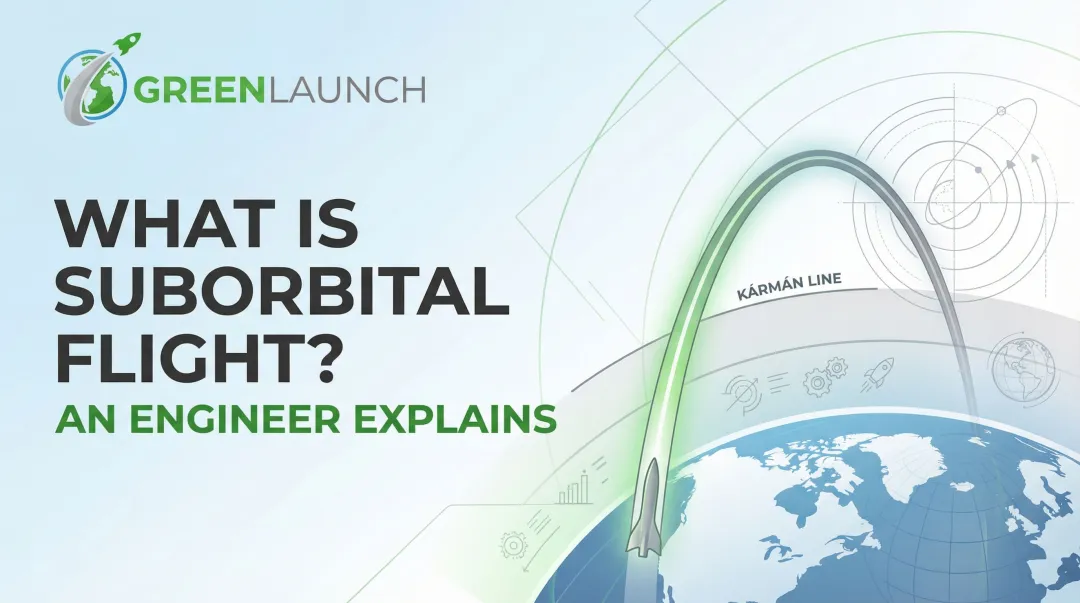
Suborbital spaceflight — reaching altitudes above the Kármán line at roughly 100 km without completing a full orbit — is accelerating toward commercial scale. After decades of government-dominated sounding rocket programs, commercial investment, reusable vehicle advances, and rising defense demand are reshaping what's operationally possible.
For aerospace organizations, research institutions, and satellite manufacturers, the next 2–3 years represent a critical window. Commercial operators are moving from proof-of-concept to high-cadence service, new propulsion approaches are cutting costs, and defense applications are drawing fresh capital.
Organizations that map this landscape now will secure early access to affordable suborbital capacity. Those that wait may find manifest slots already filled with higher-paying customers.
Key Takeaways
- Virgin Galactic targets Q4 2026 for commercial service, scaling to 10+ flights monthly by mid-2027
- Suborbital platforms provide 3–5 minutes of microgravity, cutting research costs compared to orbital missions while supporting faster experiment cycles
- Reusable vehicles cut per-flight hardware costs by 60–70% compared to expendable sounding rockets
- The DoD is investing over $1.3 billion in hypersonic programs, driving demand for commercial suborbital testbeds
- Hydrogen-oxygen propulsion systems enable high-frequency suborbital launches with near-zero carbon emissions, reducing environmental costs per mission
Commercial Space Tourism Enters Its Operational Era
Blue Origin Maintains Steady Flight Cadence
Blue Origin's New Shepard completed six crewed missions in 2025 — NS-30 through NS-36 — demonstrating the operational maturity of its reusable rocket-capsule system. By year's end, the program had flown 92 people into space, including the first wheelchair user to cross the Kármán line in December 2025. Each flight reached apogees between 104 km and 107 km, delivering roughly 144 seconds of high-quality microgravity.
Virgin Galactic Targets Late 2026 Service Start
Virgin Galactic is advancing its next-generation Delta-class spaceplane toward commercial operations. Structural assembly neared completion in early 2026, with ground testing planned for April, glide tests in Q3, and powered flight tests leading to commercial service in Q4 2026. Tickets are priced at $750,000 per seat — up from the previous $600,000 — and the company holds a backlog of more than 675 customers.
The operational target is ambitious: begin with four flights per month, then scale to 10 or more flights monthly by Q2 2027. This ramp-up represents the sector's shift from experimental to routine operations.
What Routine Operations Mean for Payload Customers
For the broader industry, this transition brings concrete changes:
- Flight intervals shrink from months to days or weeks
- Hundreds of private astronauts expected to fly through 2027
- FAA frameworks maturing to accommodate higher, routine flight rates
- Crewed flight infrastructure lowers barriers for research and uncrewed payloads
As tourism flights normalize, the spaceports, regulatory processes, and operational expertise developed for crewed missions will directly benefit uncrewed payload customers — reducing cost and bureaucratic friction for research and commercial access.
Suborbital Vehicles as Scientific Research Platforms
Microgravity Quality and Duration
Commercial suborbital vehicles provide approximately 3–5 minutes of microgravity at altitudes between 60 km and 160 km. This duration significantly exceeds parabolic aircraft flights, which deliver only 20–30 seconds per parabola, and approaches the quality of smaller sounding rockets — but with key advantages.
Research Applications
Suborbital platforms support a range of disciplines:
- Life sciences: Physiological response, cell biology, microgravity effects
- Materials science: Combustion studies, materials processing
- Atmospheric chemistry: Mesosphere and ionosphere sampling
- Earth observation: Instrument calibration and validation
- Technology readiness: Advancing engineering prototypes through flight testing
The National Academies' Decadal Survey (2023-2032) emphasizes suborbital flights for proof-of-concept research campaigns, particularly in biological and physical sciences.
NASA Flight Opportunities Integration
NASA is embedding research access into the earliest commercial operations. Virgin Galactic's first powered test flight will carry NASA Flight Opportunities research payloads, illustrating how scientific access is being built into vehicle development from the start — not as an afterthought.
Cost and Access Advantages
That embedded access matters partly because of how gentle the ride is. Commercial suborbital vehicles impose far lower structural loads than traditional sounding rockets — a difference that directly reduces what researchers need to spend on payload development.
Peak G-Load Comparison:
| Vehicle Platform | Ascent G-Load | Reentry G-Load |
|---|---|---|
| Blue Origin New Shepard | ~3 G | ~5 G |
| Virgin Galactic SpaceShipTwo | ~3 G | ~5.5 G |
| Black Brant VB Sounding Rocket | ~12 G | N/A |
| Black Brant V Sounding Rocket | ~18 G | N/A |

At 3–5.5 G peak, commercial vehicles allow researchers to fly commercial-off-the-shelf hardware without extreme ruggedization — a direct reduction in payload development costs compared to the 12–18 G loads sounding rockets impose.
Suborbital platforms also require less complex payload qualification and offer more benign ascent and reentry environments. For universities, government labs, and private R&D organizations, that combination of lower cost and simpler logistics could open access to flight testing on a scale that ISS slots or dedicated orbital missions simply can't match.
Reusability and Alternative Propulsion Reshaping Cost and Access
Reusability Delivers 60–70% Cost Reduction
Reusability has reshaped suborbital economics more than any other development in the past decade. Both New Shepard and Virgin Galactic's SpaceShip are designed for full reuse, meaning per-flight costs decrease as vehicles accumulate flights. Blue Origin's New Shepard has demonstrated up to six reflights per booster, translating to approximately 60–70% hardware cost reduction per flight compared to fully expendable alternatives.
Traditional sounding rockets require a new vehicle for each mission. Reusable platforms amortize development costs across dozens or hundreds of flights.
High Flight Rates Compound the Economic Benefit
Virgin Galactic's projected target of 10+ flights per month by mid-2027 — if achieved — would drive amortized fixed costs down rapidly. For research customers previously limited to infrequent sounding rocket launches, this creates a new economic model: lower per-seat and per-payload pricing, faster booking cycles, and the ability to conduct iterative testing campaigns.
Beyond reusability and cadence, a separate category of launch technology is emerging that approaches cost reduction from a different angle entirely.
Alternative Propulsion Technologies Emerging
Beyond rocket-powered spaceplanes and capsules, alternative propulsion approaches are being developed to offer even lower per-launch costs and higher frequency access for small payloads. These include light-gas launchers and high-velocity gas-propelled systems that differ fundamentally from conventional liquid or solid rocket motors.
Hydrogen-oxygen propulsion systems exemplify this shift. Green Launch's hydrogen-based light-gas technology uses hydrogen and oxygen as propellant, producing water as the primary combustion byproduct. This approach achieves demonstrated velocities of Mach 9 (2.97 km/sec) while eliminating carbon emissions entirely for suborbital missions.
Sustainability as a Competitive Differentiator
Environmental concerns around propellant emissions are attracting attention from launch buyers and regulators. Traditional RP1 and MethylOx rockets produce roughly 19 tons of CO₂ for each ton of payload delivered to orbit. Hydrogen-oxygen systems, by contrast, produce only water vapor — significantly reducing environmental footprint.
For payload customers, this means more than sustainability credentials. It translates to lower regulatory friction, faster approval cycles at environmentally sensitive sites, and alignment with emerging government mandates for sustainable space operations.
What This Means for Payload Customers
The combination of reusability, high flight rates, and alternative propulsion gives payload customers concrete options they didn't have three years ago:
- Lower cost-per-launch
- Faster turnaround between flights
- Reduced bureaucratic friction compared to orbital access
- Iterative testing campaigns before committing to expensive orbital deployments
For aerospace companies, defense contractors, and research organizations, the practical effect is this: mission architectures that once required orbital-class budgets can now be tested, validated, and iterated at suborbital cost and cadence.

Defense Applications and Point-to-Point Potential
Defense Sector Investment in Suborbital Capabilities
The ability to deliver payloads rapidly over intercontinental distances without completing a full orbit has strategic value. Current investment in hypersonic glide vehicles and rapid-response delivery systems is bringing suborbital transport into defense procurement conversations.
FY2026 DoD Hypersonic Budget Requests:
| Program | Service | FY2026 Request | Key Milestones |
|---|---|---|---|
| Conventional Prompt Strike (CPS) | U.S. Navy | $798.3 million | Integration into Zumwalt-class destroyers (2027-2028) |
| Long-Range Hypersonic Weapon (LRHW) | U.S. Army | $513.0 million | Delivery of tactical rounds and test/training rounds |
The DoD is investing over $1.3 billion in FY2026 alone for boost-glide hypersonic weapons, pushing contractors and commercial providers to expand suborbital testing infrastructure and testbed capacity.
In March 2026, the Defense Innovation Unit (DIU) successfully completed a suborbital launch of Cassowary Vex, a fully integrated hypersonic test platform developed under the Hypersonic High-Cadence Advanced Testing (HyCAT) program.
Point-to-Point Transportation Potential
While fully commercial passenger point-to-point service remains years away due to cost and regulatory hurdles, cargo and specialized payload delivery applications are being actively evaluated. Flight times of 30–45 minutes for intercontinental distances are physically achievable at suborbital velocities. That physical advantage is already translating into funded programs. The Air Force Research Laboratory (AFRL) is advancing its Rocket Cargo Vanguard program into the Point-to-Point Delivery (P2D) initiative, with $14.4 million requested in FY2026. The goal: demonstrate delivery of 30–100 tons of cargo to austere sites, including airdrop capability after reentry.
Dual-Use Infrastructure
Spaceports, reusable launch vehicles, and regulatory frameworks built for commercial space access also serve defense and national security customers. Spaceport America in New Mexico, for example, hosts both commercial operators and government test programs under the same infrastructure footprint. Commercial investment lowers per-mission costs and accelerates facility development; defense contracts, in return, provide revenue stability that keeps commercial operations funded. Each side of this market makes the other more viable.
What's Driving the Suborbital Surge
Three structural forces are converging:
Capital Investment Reaches Operational Maturity
A decade of private investment is now producing operational results. Companies like Blue Origin and Virgin Galactic have moved from development to high-cadence flight operations. The global suborbital space tourism market was valued at $1.2 billion in 2024 and is forecasted to reach $9.7 billion by 2033, growing at a 26.8% CAGR.

Lower Costs Open the Market
Lower per-flight costs are pulling in customers beyond governments and large aerospace primes. Research payload slots on New Shepard have historically run $50,000 to $120,000, with smaller spaces available for as little as $8,000 — putting suborbital access within reach of university labs, startups, and independent research teams.
Regulatory Modernization Reducing Barriers
The FAA's Office of Commercial Space Transportation licensed a record 148 operations in FY2024, a 30% increase over the prior year. The agency forecasts launch and reentry activity will grow to between 259 and 566 authorized operations annually by FY2034.
To accommodate this growth, the FAA launched an Aerospace Rulemaking Committee to update the Part 450 licensing rule, seeking greater clarity, flexibility, and efficiency without compromising public safety.
New Entrants Are Pressuring Incumbents
Fresh competition is reshaping the market's pace. NordSpace is testing its Taiga suborbital rocket from Canada's Atlantic Spaceport Complex in March 2026 — a sign that the sector is attractive enough to justify new capital formation. That pressure is pushing incumbents to accelerate flight cadence and reduce payload costs to hold their customer base.
Research Demand Is Growing Faster Than Supply
Scientific research organizations represent the sector's most consistent near-term demand. NASA's Flight Opportunities program alone has funded over 200 suborbital payload flights since 2011, and interest from commercial researchers is accelerating. As platforms publish reliable flight schedules and standardized payload interfaces, booking frequency rises — and higher utilization reduces per-flight costs across the board.

Future Signals to Watch in Suborbital Spaceflight
Near-Term Milestones
Virgin Galactic's Q4 2026 commercial service flight will be the defining industry signal. If it proceeds on schedule with research payloads followed by private astronauts, it confirms the commercial suborbital segment has reached operational maturity.
Blue Origin's flight cadence through 2026–2027 will signal how quickly per-flight economics improve and whether the company can sustain or exceed its 2025 pace.
Emerging first flights from new entrants like NordSpace's Taiga launch from Canada will indicate geographic diversification and competitive intensity.
Technologies and Regulatory Developments
Three developments will shape the sector over the next 1–3 years:
- FAA licensing framework updates: How quickly the FAA accommodates higher flight rates will determine operational tempo for all commercial operators
- Hypersonic point-to-point cargo demonstrations: Whether defense-backed programs materialize will confirm whether rapid intercontinental delivery is commercially viable
- Alternative propulsion system advancement: Whether non-rocket approaches like gas-propelled systems — including hydrogen light-gas platforms like those developed by Green Launch — advance far enough to compete on price with rocket-based vehicles for small payloads
Forward-Looking Takeaway
The signals above point in one direction: the window to engage early is narrow. Organizations that act before commercial suborbital access becomes routine will have more options, lower costs, and better positioning than those who wait.
Priorities by audience:
- Research institutions — Secure payload manifest slots now, before tourism customers absorb available capacity
- Defense contractors — Evaluate rapid delivery options for time-sensitive logistics while program structures are still forming
- Small satellite manufacturers — Use suborbital flights for lower-cost technology validation before committing to orbital missions
Early engagement with service providers, technology developers, and the FAA regulatory process will matter more than timing the market perfectly.
Frequently Asked Questions
What is suborbital spaceflight, and how does it differ from orbital spaceflight?
A suborbital flight reaches outer space (above the Kármán line at ~100 km altitude) but does not achieve the horizontal velocity needed to orbit Earth. The vehicle arcs back down to the surface rather than circling the planet, making it shorter in mission duration and less expensive to execute than orbital missions.
How much does a commercial suborbital flight cost today?
Payload research flights are priced well below crewed mission equivalents, with rates varying by vehicle and payload mass. Costs are expected to fall as flight frequency increases — making suborbital platforms increasingly viable for scientific and defense research organizations with tight budgets.
Which companies are leading commercial suborbital flight development?
Blue Origin (New Shepard) and Virgin Galactic (Delta-class SpaceShip) lead the field, with Blue Origin completing 15 flights through 2025 and Virgin Galactic targeting Q4 2026 for commercial service resumption. Emerging entrants include NordSpace in Canada, with its Taiga rocket slated for testing in 2026.
What kinds of scientific experiments can be conducted on suborbital flights?
Suborbital platforms support microgravity life sciences, materials processing and combustion, atmospheric science, Earth observation instrument calibration, and engineering technology readiness testing. A practical advantage is that payloads can be integrated, accessed, and recovered quickly — reducing turnaround time compared to orbital missions.
How long does a suborbital flight last, and how much microgravity time does it provide?
Total flight duration is typically 10–15 minutes from launch to landing, with approximately 3–5 minutes of high-quality microgravity experienced at the apex — significantly more than parabolic aircraft flights (~20–30 seconds per parabola) but less than an orbital mission.
What makes suborbital launch more sustainable than traditional rocket-based access to space?
Propulsion systems using hydrogen and oxygen produce water as the primary combustion byproduct — a clean alternative to kerosene or solid-fuel propellants used in conventional expendable rockets. Ground-based launch infrastructure further reduces per-mission material waste, lowering the environmental impact of routine payload delivery.