What is space exposure seed testing?
Space exposure seed testing is a research mission in which seed samples are launched to high-altitude or near-space environments to study how pressure, temperature variation, acceleration, and atmospheric conditions affect biological performance. These missions help agricultural researchers evaluate resilience, germination behavior, and potential crop adaptation under extreme exposure profiles that are difficult to reproduce fully in ground-based testing.
How high can Green Launch send agricultural research payloads?
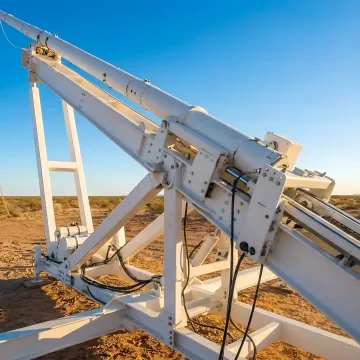
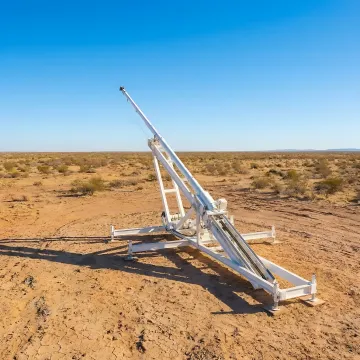
Green Launch supports sub-orbital payload delivery to the stratosphere and beyond, making it suitable for agricultural research missions that require meaningful high-altitude exposure. The company has completed vertical launch testing with payloads accelerated beyond Mach 3 and has developed systems intended for broader near-space and orbital applications, depending on mission design and payload requirements.
What types of seed experiments can be supported?
Supported experiments can include seed exposure studies, biological survivability testing, post-flight germination analysis, environmental stress response evaluation, and missions paired with atmospheric data collection. Research teams can design payloads around specific crop varieties, exposure durations, and instrumentation needs, allowing the mission profile to align with agricultural, academic, or commercial research objectives.
Can payloads include sensors and environmental monitoring equipment?
Yes. Agricultural research payloads can be designed to include sensors, monitoring instruments, and supporting hardware that capture environmental and mission data during flight. This is especially useful when researchers want to compare seed outcomes with measured conditions such as altitude bands, temperature shifts, pressure changes, or atmospheric characteristics gathered during the launch and recovery sequence.
Why use high-altitude launch testing instead of only laboratory simulation?
Laboratory simulation is useful, but real flight testing exposes seeds and instruments to combined launch, ascent, and atmospheric conditions that are difficult to replicate together on the ground. High-altitude missions can provide more realistic data on acceleration loads, environmental transitions, and operational performance, helping researchers validate findings before scaling studies or pursuing more advanced biological research programs.
Is Green Launch's technology environmentally conscious?
Green Launch uses hydrogen and oxygen gas propellant in its light-gas propulsion approach, with water vapor as the primary byproduct. The company positions this system as a lower-emission alternative to conventional launch methods. For research organizations with sustainability goals, this can support mission planning that values both advanced aerospace capability and reduced environmental impact.
Who typically uses these launch services?
Typical customers include scientific research organizations, aerospace and defense groups, and satellite manufacturers. For seed exposure testing specifically, the service is well suited to agricultural researchers, universities, biotech teams, and innovation programs that need controlled access to high-altitude environments for biological experiments, environmental correlation studies, or specialized payload validation.
How do I start planning a seed exposure research mission?
The process usually begins with defining the research objective, payload size, instrumentation needs, target altitude range, and desired exposure conditions. From there, Green Launch can evaluate mission fit against its sub-orbital and high-velocity launch capabilities. Early planning is important because payload integration, flight profile design, and data collection requirements all influence mission feasibility and preparation timelines.