What atmospheric altitudes can Green Launch's sampling systems reach?
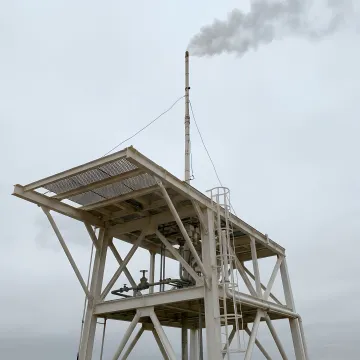
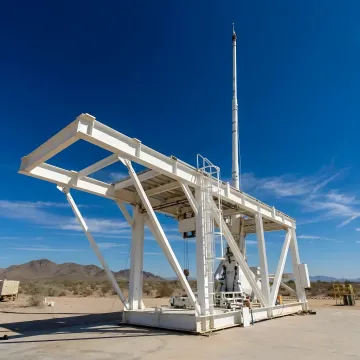
Our light-gas propulsion technology delivers payloads to stratospheric altitudes (approximately 50 km) with Mach 3+ velocities, and mesospheric altitudes (60-80 km) with velocities up to Mach 9. This range covers critical atmospheric layers including the ozone layer, middle stratosphere, and the previously difficult-to-access mesosphere and lower ionosphere. Our vertical launch system at Yuma Proving Ground has been proven through multiple successful missions, providing reliable access for climate research, atmospheric chemistry studies, and ionospheric investigation.
How does light-gas propulsion benefit atmospheric sampling missions?
Light-gas propulsion using hydrogen-oxygen fuel produces only water vapor, eliminating launch vehicle contamination that could compromise atmospheric measurements—a critical advantage for climate and chemistry studies. The technology achieves rapid acceleration to target velocities within seconds, minimizing lower-atmosphere transit time and maximizing data collection at research altitudes. Our system's 60-90 minute launch readiness enables responsive sampling during atmospheric events and efficient campaign scheduling. Additionally, the significantly lower cost compared to traditional sounding rockets allows research teams to conduct more frequent missions within their budgets.
What types of scientific instruments can be integrated into sampling payloads?
Our specialized fiberglass vehicle bodies accommodate a wide range of atmospheric instrumentation including spectrometers, particle counters, temperature and pressure sensors, gas analyzers, and communication equipment. The RF-transparent fiberglass construction allows antennas and telemetry systems to be protected inside the vehicle while maintaining full transmission capability throughout the mission. Payloads are custom-integrated based on your research objectives, with our engineering team ensuring all instruments are properly secured for hypersonic acceleration loads while maintaining calibration and operational integrity. We work closely with researchers to optimize payload configurations for specific atmospheric measurements.
How quickly can a sampling mission be scheduled and executed?
Once payload integration and testing are complete, our system at Yuma Proving Ground can be prepared for launch within days. The actual launch window flexibility is exceptional—our technology supports launches every 60 to 90 minutes when needed, enabling responsive deployment during atmospheric events or efficient execution of multi-launch sampling campaigns. Mission design and payload integration typically require 4-8 weeks depending on instrument complexity, but our streamlined processes and experienced team minimize preparation time. For ongoing research programs, we can establish regular launch schedules that align with seasonal atmospheric variations or research milestones.
What data is collected and how is it transmitted during missions?
Real-time telemetry transmits all instrument data continuously throughout the mission, from launch through peak altitude and descent phases. Our RF-transparent vehicle design ensures uninterrupted data transmission at all altitudes. Collected data includes your scientific measurements plus comprehensive flight performance parameters such as velocity profiles, altitude tracking, vehicle orientation, and environmental conditions. All telemetry is recorded and provided in standard formats compatible with research analysis tools. Post-mission, you receive complete data packages including raw sensor data, processed measurements, flight trajectory information, and mission performance reports to support your atmospheric research and publication requirements.
How does Green Launch ensure measurement accuracy and data quality?
Data quality begins with comprehensive pre-launch testing and calibration of all instruments at our facility, followed by environmental simulation testing to verify sensor performance under mission conditions. Our zero-emission propulsion eliminates launch contamination that could affect atmospheric chemistry measurements. The RF-transparent vehicle design and advanced telemetry systems ensure continuous, interference-free data transmission. Flight trajectory precision and velocity control are validated through extensive testing—we've conducted over 25 successful launches at Yuma Proving Ground with consistent performance. Additionally, our team includes experienced physicists who understand atmospheric measurement requirements and provide analysis support to help correlate your data with atmospheric models.
What is the cost structure for atmospheric sampling missions?
Our light-gas propulsion technology delivers atmospheric sampling missions at a fraction of traditional sounding rocket costs—typically 60-80% lower per launch. Pricing is mission-specific based on target altitude, payload complexity, required velocity, and launch campaign scope. The fundamental advantage is our hydrogen-oxygen propellant system with minimal infrastructure requirements compared to solid-fuel rockets. Multiple-launch campaigns receive volume pricing, making comprehensive atmospheric studies more affordable. We work with research institutions to structure pricing that fits grant budgets and funding timelines. Contact our team for a detailed mission cost estimate based on your specific research objectives and payload requirements.
Can payloads be recovered and reused after atmospheric sampling missions?
Vehicle recovery depends on mission profile and research requirements. For stratospheric missions with parachute recovery systems, payloads and instruments can be retrieved intact for data download, instrument inspection, and potential reuse in subsequent missions—significantly reducing per-mission costs for multi-launch campaigns. Higher-velocity mesospheric missions typically focus on real-time telemetry transmission rather than recovery. Our engineering team designs each mission considering your reusability needs, instrument costs, and research timeline. Recovered vehicles undergo thorough assessment to determine component condition and reuse potential. Many research programs benefit from a hybrid approach with some instruments recovered while expendable sensors collect one-time measurements at peak altitudes.