Payload Delivery Studies
Assess suborbital payload and cargo delivery concepts using Green Launch’s experience with stratospheric launches, ballistic trajectories, and high-speed launch system performance.

Evaluate suborbital ballistic cargo concepts with Green Launch’s feasibility study service, built on real-world light-gas propulsion testing and high-velocity launch experience. We help aerospace, defense, and research organizations assess technical viability, payload pathways, cost potential, and operational considerations for sustainable cargo delivery beyond conventional launch models.

Technical study services focused on launch viability, payload delivery concepts, and supporting propulsion analysis.
Assess suborbital payload and cargo delivery concepts using Green Launch’s experience with stratospheric launches, ballistic trajectories, and high-speed launch system performance.
Evaluate mission feasibility for atmospheric sampling and research payloads, including altitude targets, vehicle considerations, and data-collection objectives for upper-atmosphere access.
Support feasibility decisions with insights drawn from horizontal and vertical test firing data, propulsion parameters, and demonstrated high-velocity launch results.
Explore whether suborbital cargo concepts align with hypersonic testing requirements, leveraging Green Launch’s record-setting scramjet and Mach-range launch experience.
Examine how suborbital cargo studies can inform future orbital delivery strategies, including scalability, turnaround assumptions, and payload economics.
Analyze projected cost efficiency for ballistic cargo concepts using Green Launch’s low-emission propulsion approach and stated delivery economics for future space logistics.
Green Launch helps organizations determine whether a suborbital ballistic cargo concept is technically practical, operationally realistic, and economically promising. Backed by proven light-gas propulsion testing, our studies examine payload constraints, launch architecture, trajectory assumptions, and sustainability goals so decision-makers can move forward with clearer engineering, research, and investment direction.

Green Launch’s feasibility work is grounded in documented propulsion milestones and successful launch testing.
Organizations trust Green Launch for technically grounded studies shaped by real launch development experience.
Feasibility recommendations are informed by successful horizontal and vertical launch testing, not theory alone.
Led by propulsion and systems experts with deep experience in high-velocity aerospace applications.
Studies align cargo concepts with hydrogen-oxygen propulsion approaches designed for lower-emission launch operations.
Analysis emphasizes practical pathways to reduced launch costs and scalable cargo delivery models.
Experienced leaders guiding advanced launch feasibility studies.
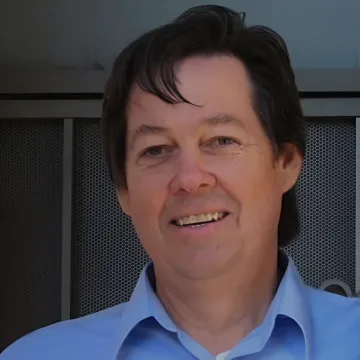
Chief Technical Officer
Dr. John W. Hunter serves as Chief Technical Officer at Green Launch and brings extensive expertise in high-velocity propulsion systems. A physicist by training, he previously led the SHARP project at Lawrence Livermore National Laboratory, giving him a strong foundation in advanced launch concepts and extreme-velocity testing. At Green Launch, he helps shape the technical direction behind light-gas propulsion applications for suborbital and orbital access. His background is especially valuable for feasibility studies that require rigorous evaluation of propulsion performance, payload constraints, trajectory assumptions, and engineering practicality. Clients benefit from his ability to connect experimental launch data with real-world mission planning, helping organizations assess whether a ballistic cargo concept can move from early idea to credible development pathway.
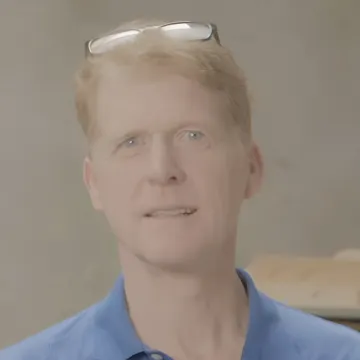
Strategic Outreach
Eric Robinson supports Green Launch through strategic outreach informed by his background as a systems scientist and entrepreneur. His expertise in fluid delivery systems for aerospace applications adds practical value to feasibility studies involving propulsion architecture, operational planning, and stakeholder alignment. He helps bridge technical concepts with customer objectives, making complex launch ideas easier to evaluate from both engineering and business perspectives. For organizations exploring suborbital ballistic cargo, Eric contributes to framing mission goals, identifying viable use cases, and clarifying how Green Launch’s technology may fit research, defense, or commercial logistics needs. His role is especially important in translating advanced launch capabilities into understandable study outcomes that support informed planning and partnership discussions.
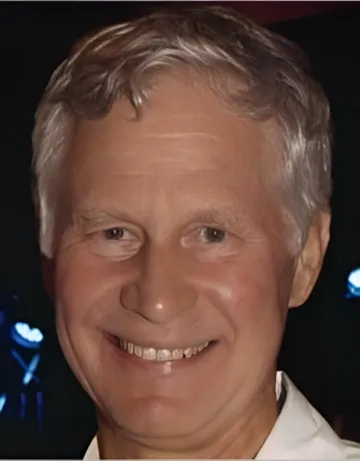
Chairman of the Board
Don Whitney serves as Chairman of the Board and contributes operational perspective shaped by his experience as an Air Force pilot and environmental consultant. His background supports Green Launch’s broader mission of developing practical, sustainable alternatives to traditional launch systems. In feasibility studies, Don’s insight is valuable when evaluating operational planning, mission readiness considerations, and environmental implications tied to suborbital cargo concepts. He helps ensure that technical ambition is balanced with execution realities, especially for organizations assessing how a ballistic delivery model could function in applied settings. His leadership strengthens Green Launch’s ability to approach feasibility from multiple angles, combining aerospace operations awareness with a disciplined view of planning, risk, and long-term sustainability.
A suborbital ballistic cargo feasibility study evaluates whether a cargo delivery concept can be launched on a suborbital trajectory using a specific propulsion approach. It typically reviews payload mass, launch velocity, trajectory assumptions, structural constraints, mission objectives, recovery or delivery considerations, and projected economics. The goal is to determine technical practicality before major development spending begins.
Speak with Green Launch about your mission concept and study goals.

Years advancing light-gas launch development.
Demonstrated launch testing in field conditions.
Hydrogen-oxygen system with water byproduct.
Share your mission goals, payload concept, and technical questions. Green Launch will help you explore whether a suborbital ballistic cargo approach is a practical fit.
For immediate assistance, feel free to give us a direct call at 619-933-6678. You can also send us a quick email at jwhunter2004@yahoo.com
For immediate assistance, feel free to give us a direct call at 619-933-6678. You can also send us a quick email at jwhunter2004@yahoo.com